
You can ship the best cargo in the world and still lose the deal to a container that smells. A damp floor, a trace of the last load’s chemicals and a few grains of old rice in the corner. Any of these can mean a rejected shipment or a failed inspection or a customer who doesn’t come back.
That’s the quiet reason container washing exists. It isn’t glamorous but it sits right in the middle of how clean, safe and compliant cargo moves. Here’s what washing actually involves when you need it and what to look for in a provider in Dubai.
Why containers get dirty in the first place
A shipping container lives a hard life. One year it carries dry goods and the next it’s hauling something oily, dusty or damp. Between loads it sits in yards, stacks and depots picking up grime, moisture and whatever the last cargo left behind.
Common culprits include
- Spilled liquids, powders and cargo residue
- Oil, grease and rust flakes on the floor and lower walls
- Dust, mud and plant matter from yards and trucks
- Mould and mildew from trapped moisture
- Odours that soak into the timber floor and linger for months
None of that is unusual. The problem is that the next customer’s cargo doesn’t care how it got there.
What a proper container wash includes
A quick sweep isn’t washing. A proper wash is a sequence and skipping a step is where problems start.
Inspection first. Before any water goes in someone checks the container inside and out. Floor condition, walls, door seals and signs of previous cargo. This tells the team what kind of clean it needs.
Removing loose debris. Sweeping and clearing out leftover dunnage, packing material and loose residue so the wash can reach the surfaces underneath.
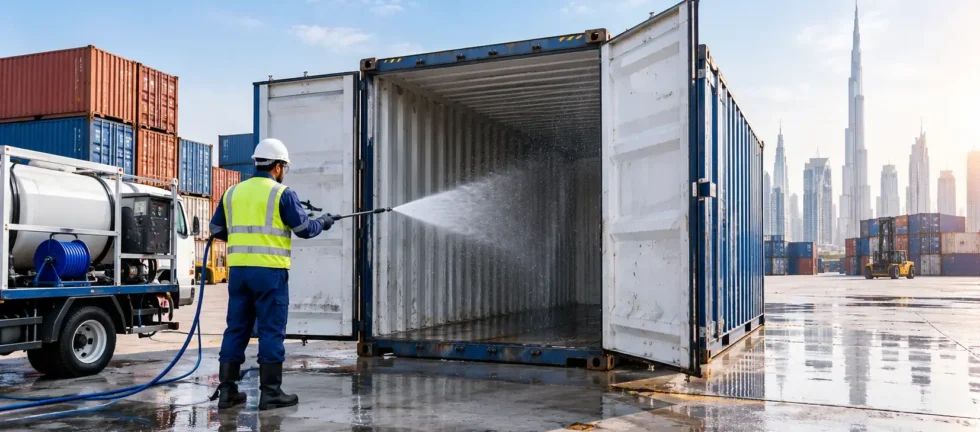
Washing and degreasing. High pressure water, with detergent or a degreasing agent where oil or stubborn residue is present. The goal is to strip grime off the floor, walls, roof and door area, not just move it around.
Rinsing and drying. Rinsing away the cleaning agents then letting the container dry properly. Drying matters more than people think. A container closed up while still damp is an invitation for mould and a musty smell.
Final check. A last look to confirm the container is clean, dry and odour free before it goes back into service.
For special cargo the process can go further with extra steps such as steam cleaning or deodorising. That depends on what the container carried before and what it will carry next.
When you actually need a container washed
Before loading food or sensitive cargo. Food, beverages, textiles and other goods that pick up smells or contamination need a spotless and odour free box. Even a faint chemical smell can be enough for a buyer to refuse the load.
After carrying something messy or hazardous. If the last cargo was oily, dusty, chemical or otherwise residue heavy the container needs a thorough clean before it’s used again.
Before inspection or customs checks. Some destinations are strict about contamination, soil and plant material. A clean container helps you avoid delays and re cleaning at the port.
Before sale, rental or return. A clean container shows better, rents faster and avoids disputes about condition when it comes back from a customer.
After long storage. Containers left in yards for months collect dust, moisture and sometimes pests. A wash resets them.
The cost of skipping it
Washing is a line on a budget so it’s tempting to cut. The real cost shows up somewhere else.
A contaminated load can mean spoiled goods a claim from your customer and a damaged relationship. A failed inspection can mean demurrage charges while the container sits at the port plus the cost of cleaning it anyway at the worst possible time. A container with a lingering smell can lose a rental customer for good.
Wash it and keep customers satisfaction
How washing fits with repair and storage
Cleaning rarely happens alone. The best time to wash a container is often alongside a check for damage because dirt hides problems. Once the floor is clean you can see rust patches and damaged panels and worn seals clearly.
That’s why it makes sense to use a depot that handles the whole job. At Container Hub, washing sits alongside container repair and our wider container depot services at our Mina Jebel Ali Industrial Area site. A container can come in dirty and damaged, be inspected, cleaned, repaired and be ready to go back out without moving between vendors.
What to look for in a container washing provider
Not every yard that owns a pressure washer is a good choice. A few things are worth checking.
- Do they inspect before and after? A provider that doesn’t look at the container isn’t really cleaning it.
- Can they handle different levels of dirt? Light dust and oil-soaked floors need different methods.
- How do they dry the container? Ask. It tells you a lot about how careful they are.
- Do they deal with waste properly? Wash water from oily or chemical residue needs responsible disposal.
- Can they do repair too? One stop saves time and cleaning shows what needs fixing.
- Are they close to the port? A depot near Jebel Ali cuts transport time and cost.
Final thoughts
A clean container is one of those things nobody notices when it’s right and everybody notices when it’s wrong. Washing protects your cargo, your reputation and your schedule, and it’s far cheaper than fixing the damage after the fact.
If you need containers washed, or you’re not sure what level of clean your cargo needs, get in touch with our team. Tell us what the container carried and what it’s about to carry, and we’ll point you to the right service.