
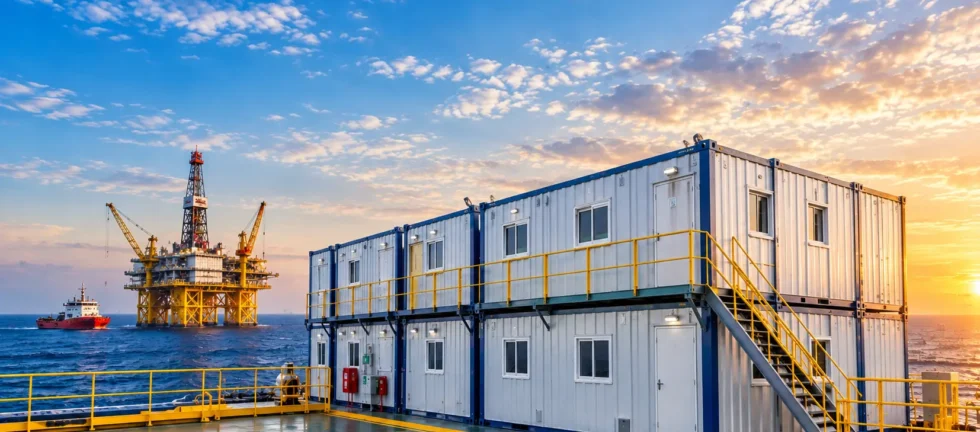
Ask anyone who has managed a crew offshore what goes wrong first and it’s rarely the work. It’s the bunk. Too hot, too loud, bad air and no real sleep. A tired crew makes slow, careless calls and that costs far more than the cabin ever did.
That’s why offshore container accommodation has become a proper line item in project planning across the UAE. But buying or renting one isn’t like ordering a standard container. The specs are tighter, the paperwork matters, and the price depends on more than most people expect. Here’s how it really works, from a team that builds and inspects these units every week.
What exactly is offshore container accommodation?
It’s a self-contained living module made to be lifted by crane, shipped and set down somewhere harsh. Inside you’ll find beds, insulation, air conditioning, lighting and power and often a small washroom. Outside is a steel frame built to take repeated lifts and years of salt air.
Most start out as a heavy duty container structure, which then gets engineered, reinforced and fitted out so it can be certified for offshore use. That certification is the whole point. A container with a bed in it sitting in a yard is just a converted box. A certified, inspected and documented module is something an operator will actually accept on a platform.
You’ll find them on oil and gas platforms and support vessels, on marine construction and dredging jobs, in remote island camps, and wherever a shutdown crew needs somewhere decent to sleep close to the work.
If you’d like to see what we build and supply from our Jebel Ali depot have a look at our offshore accommodation containers.
The specs that decide whether a unit is any good
Brochures love dimensions. In real life a few other things decide whether a unit works on your site.
Structure and lifting. The frame has to survive crane lifts again and again with certified padeyes and a lifting set matched to the unit’s weight. Coating matters just as much. Marine grade protection is the difference between a unit that’s fine after ten years and one that needs rework after two.
Fire rating. Fire is a real risk offshore, so walls, floors and ceilings are often specified with ratings like A-60 depending on where the unit sits and what your operator asks for. Detection emergency lighting and clear exits are part of the design from day one not extras you bolt on later.
Insulation and comfort. This is the one buyers underestimate most. Gulf heat is relentless. Proper insulation, an air conditioner sized for the space and walls that dampen noise decide whether people actually rest.
Electrical fit out. Distribution boards, sockets, lighting and cabling should follow whatever standard your project specifies. If the unit will sit near a classified hazardous area, the electrical equipment may need a matching rating.
Layout. Single cabins, twin rooms, welfare units with washrooms, or a mix of office and sleeping space. Crew size, shift pattern and how long people stay will tell you which one fits.
Certification: the part you can’t skip
This is where an offshore unit really parts ways with an ordinary container. If it’s going to be lifted onto a platform or vessel, it normally needs third-party proof that it was designed, built and tested for the job.
In practice that means the unit is built to a recognised offshore container standard, commonly DNV-based requirements plus lifting standards, whichever your operator specifies. It’s inspected and tested by an independent body. TUV and Bureau Veritas (BV) are two that regularly show up in project requirements, and our page on TUV/BV certified containers explains how that works on units we handle.
Then there’s the paperwork: certificates, test records, drawings and material traceability. We’ve seen units turned away at the gate because a document was missing or the serial number didn’t match the frame. It happens more than people admit.
And certification doesn’t last forever. Offshore units are re-inspected on a schedule to stay valid, so ask any supplier how that’s handled before you sign.
One simple habit saves a lot of grief: ask which standard the unit was built to, who certified it, and whether the certificate is current. Requirements shift between operators, flag states and projects, so check them against your own scope first. A good supplier answers all three without blinking.
Where the money actually goes
Everyone wants one number. The honest answer is that there isn’t a standard one, because the final price is built from several pieces.
New, converted or used. A new purpose-built unit costs more up front but comes with a clean certification history. A refurbished unit can lower the entry price, as long as it’s properly inspected and recertified. The saving vanishes fast if hidden repairs turn up later.
Size and layout. More cabins, more washrooms and more furniture mean more fit-out. A basic sleeping module sits at one end of the range and a fully fitted multi-room unit at the other.
Specification level. Higher fire ratings, better insulation and hazardous-area electrics all add cost. They also add safety and make acceptance easier on strict sites so this is rarely where you want to save money.
Certification and inspection. Third party testing and documentation carry their own fees and they come back around over the life of the unit.
Transport and installation. Getting a certified module from our depot to a quayside or site, plus crane hire and positioning, all counts. Our container transportation team handles that side.
Buy or rent. For a short project or a shutdown, container rental often makes more sense and you skip the cost of ownership and re inspection. For long running operations, buying usually wins in the end. The break even point depends on how long you’ll need the unit, so run the numbers both ways.
Because every project is different, the only figure worth trusting is a written quote against a clear spec. Send us your crew size, location, duration and certification needs and we’ll price the real thing.
Eight questions to ask before you sign
- Which offshore standard was this unit designed and built to?
- Who certified it, and can I see the current certificate?
- What fire rating do the panels carry, and is it right for where the unit will sit?
- What’s in the documentation pack?
- How is it protected against corrosion, and what’s the coating spec?
- Who handles transport, lifting and installation?
- What happens when re inspection comes due?
- Can the layout change if our crew plan changes?
If a supplier hesitates on any of these there is something fishy
Why it helps to work with someone local
The UAE throws its own conditions at equipment heat, humidity, salt in the air and deadlines that don’t move. A unit that looks perfect on paper can struggle once it meets real Gulf weather. A depot that builds, repairs and inspects containers every day knows where the problems tend to show up and designs around them.
At Container Hub we handle the whole chain from one base in Mina Jebel Ali Industrial Area. Sourcing, modular construction, repair, certification support and delivery all sit under one roof so you’re not chasing five vendors for one unit.
Final thoughts
A good offshore container accommodation unit is quiet, cool, safe and properly certified. A bad one follows you through the whole project. Put your energy into the specs, the certification and the paperwork and the price conversation gets a lot simpler.
Planning a job and need accommodation that meets offshore requirements? Get in touch with our team and tell us your crew size, location and timeline. We’ll come back with a clear specification and a written quote.